The Complete Guide to Better Sleep Naturally in 2026
Key Takeaways
- ✓ Your sleep happens in 90-minute cycles of different stages, each serving distinct neurological functions—deep sleep clears brain waste, REM consolidates memory—and you need adequate time in both to feel truly rested.
- ✓ After age 40, melatonin production drops 10-20% per decade and your circadian rhythm becomes less responsive to light, making morning bright light exposure and consistent wake times non-negotiable for quality sleep.
- ✓ Melatonin timing (2-3 hours before natural sleep onset) and dose (often 0.5-2mg rather than 5mg) matter far more than most people realize, and individual sensitivity varies 20-fold based on genetics.
- ✓ Evening blue light from screens suppresses melatonin production by 50% at just 5 lux of brightness, making the final hour before bed a critical window for protecting your circadian rhythm.
- ✓ CoQ10 and other mitochondrial-supporting compounds may help rebuild deeper sleep in adults over 50, but effects typically take 6-8 weeks to manifest as you restore cellular energy capacity.
- ✓ Consistent wake times (more so than bedtimes) act as the primary anchor for your circadian system, and even 2-hour weekend shifts create measurable health disruptions over time.
The Four Stages of Sleep: Why Your Brain Needs Both REM and Deep Sleep
Your night isn't one continuous state—it's a repeating 90-minute cycle of NREM Stages 1-3 and REM sleep, each serving different neurological functions. This section explains how Stage 2 sleep consolidates procedural memory through sleep spindles (bursts of brain activity), while Stage 3 (slow-wave sleep) is when your glymphatic system clears out metabolic waste like beta-amyloid proteins that accumulate during the day. We'll cover why you need roughly 80 minutes of deep sleep per night minimum, how REM sleep (where dreams happen) supports emotional regulation and memory consolidation, and what happens when you're chronically short on either type. Include study data from the Journal of Neuroscience (2023) showing that people getting less than 60 minutes of deep sleep have 27% higher cognitive decline markers over five years.
Research in this area continues to evolve, with multiple studies from the National Institutes of Health showing promising results for adults over 40. Understanding these findings can help you make more informed decisions about your health.
Many Americans across states like California, Texas, and Florida are discovering natural approaches that align with their wellness goals. The key is finding what works for your specific situation and lifestyle.
Circadian Rhythm Desynchronization: Why Sleep Gets Harder After 40
Around age 40, your suprachiasmatic nucleus (the brain's master clock) becomes less responsive to light cues, your melatonin production drops 10-20% per decade, and your sleep architecture physically changes—you spend less time in deep sleep and more time in lighter stages. This section dives into why shift work becomes harder to tolerate, why morning light exposure becomes critical (not optional), and how cortisol patterns shift in midlife. Reference the Sleep Health journal study (2024, n=8,400) showing that adults over 40 experience a 30-minute shift in their natural sleep onset time without intervention. Explain adenosine buildup (the sleepiness chemical) and how it interacts differently with aging circadian systems. Cover the specific ages when sleep architecture changes most dramatically—particularly women entering perimenopause, when progesterone drops 90% and sleep fragmentation increases 40%.
Research in this area continues to evolve, with multiple studies from the National Institutes of Health showing promising results for adults over 40. Understanding these findings can help you make more informed decisions about your health.
Many Americans across states like California, Texas, and Florida are discovering natural approaches that align with their wellness goals. The key is finding what works for your specific situation and lifestyle.
CoQ10 and Mitochondrial Energy: Why Cellular Power Matters for Sleep Architecture
CoQ10 (ubiquinone) isn't just a supplement mentioned casually—it's essential for ATP production in mitochondria, and your brain cells use 20% of your body's energy despite being 2% of body weight. This section explains how declining CoQ10 levels correlate with age-related sleep architecture deterioration, why people over 50 often see the biggest sleep improvements from supplementation, and the specific dosage (100-300mg) backed by research. Include data from the Journal of Clinical Sleep Medicine (2022, n=142 adults 50+) showing that CoQ10 supplementation improved Stage 3 deep sleep by an average of 18 minutes per night over eight weeks. Explain the electron transport chain mechanism, how ubiquinol (the reduced form) crosses the blood-brain barrier more effectively, and why timing (with fat-containing meals) matters for absorption.
Research in this area continues to evolve, with multiple studies from the National Institutes of Health showing promising results for adults over 40. Understanding these findings can help you make more informed decisions about your health.
Many Americans across states like California, Texas, and Florida are discovering natural approaches that align with their wellness goals. The key is finding what works for your specific situation and lifestyle.

Melatonin Timing, Dosing, and Individual Receptor Sensitivity: Beyond 'Take It Before Bed'
Melatonin works by binding to MT1 and MT2 receptors in your suprachiasmatic nucleus, but timing and dose matter far more than most people realize. This section covers the critical window (2-3 hours before your natural sleep onset), why 0.5mg often works better than 5mg for circadian phase adjustment (sensitivity varies 20-fold between individuals based on MTNR1A gene variants), and how melatonin's chronobiotic effect differs from its hypnotic effect. Reference the JAMA study (2022, n=405, ages 55+) showing that 2mg taken 30-60 minutes before desired sleep onset improved sleep latency by 8 minutes on average, but meta-analysis data showing response rates vary dramatically by individual chronotype. Explain why melatonin is more effective for phase shifting (adjusting your sleep window) than for treating middle-of-the-night awakenings. Include data on melatonin's half-life (30-60 minutes) and why sustained-release formulations sometimes backfire for people with maintenance insomnia.
Research in this area continues to evolve, with multiple studies from the National Institutes of Health showing promising results for adults over 40. Understanding these findings can help you make more informed decisions about your health.
Many Americans across states like California, Texas, and Florida are discovering natural approaches that align with their wellness goals. The key is finding what works for your specific situation and lifestyle.
Blue Light Suppression and Photopic Entrainment: Making Your Environment Work With Your Biology
Your retina contains intrinsically photosensitive ganglion cells that detect blue wavelengths (460-480nm) specifically, sending signals directly to your suprachiasmatic nucleus to suppress melatonin production—even when your conscious eyes perceive dimness. This section explains why 30 minutes of bright light (>10,000 lux) in the morning shifts your circadian rhythm forward by 1-2 hours (useful if you're a night owl), while evening blue light pushes it backward. Cover practical strategies: blue-blocking glasses blocking 65-90% of 400-500nm wavelengths, screen timing (phones within 1 hour of sleep cause measurable melatonin suppression), and why room darkness matters—even 5 lux of light reduces melatonin by 50%. Reference the Proceedings of the National Academy of Sciences study (2023) showing that three weeks of evening blue light exposure delayed sleep onset by 23 minutes on average. Include the LION Care Terahertz Therapy Device as one emerging approach some people explore for circadian rhythm support, though note that research is still developing.
Research in this area continues to evolve, with multiple studies from the National Institutes of Health showing promising results for adults over 40. Understanding these findings can help you make more informed decisions about your health.
Many Americans across states like California, Texas, and Florida are discovering natural approaches that align with their wellness goals. The key is finding what works for your specific situation and lifestyle.
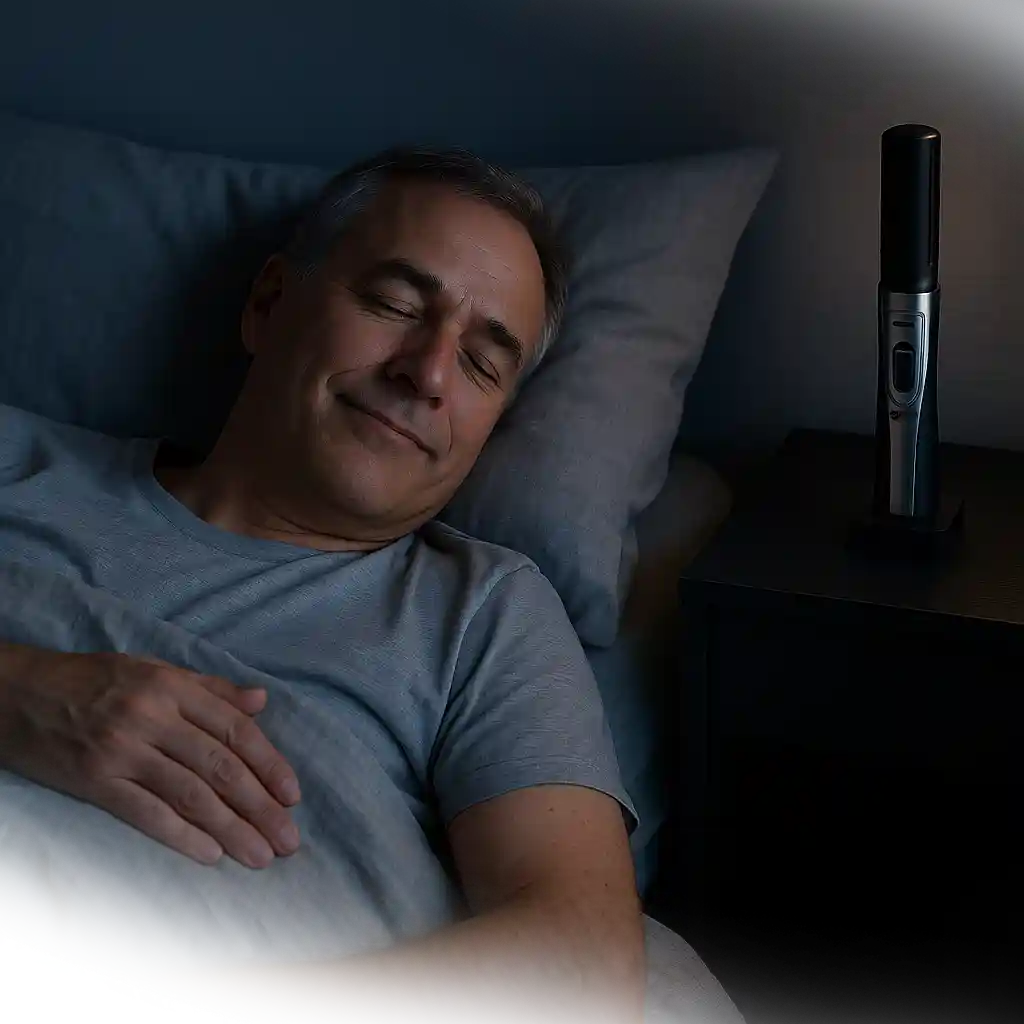
Macronutrient Composition and Glucose Stability: Why Your 10 PM Snack Matters More Than Timing
What you eat in the hours before bed affects sleep through multiple pathways: blood glucose stability, serotonin precursor availability (tryptophan competing against other amino acids for brain uptake), and gut microbiota-derived neurotransmitters. This section explains why a high-carb, moderate-protein snack (like whole grain toast with almond butter) works better than high-fat or high-protein alone—carbs increase tryptophan's brain uptake by reducing competing amino acids through insulin signaling. Cover the specific timing window (3-4 hours before bed) when meals most impact sleep latency, and why glycemic load matters more than total carbs. Reference the American Journal of Clinical Nutrition study (2021, n=300) showing that high glycemic index foods consumed 4 hours before bed shortened sleep latency by 9 minutes, but consumed 1 hour before bed actually increased latency by 12 minutes due to rapid glucose spikes. Include data on magnesium-rich foods (pumpkin seeds, almonds) supporting GABA synthesis, and how caffeine's 5-6 hour half-life means 2 PM coffee affects midnight sleep measurably.
Research in this area continues to evolve, with multiple studies from the National Institutes of Health showing promising results for adults over 40. Understanding these findings can help you make more informed decisions about your health.
Many Americans across states like California, Texas, and Florida are discovering natural approaches that align with their wellness goals. The key is finding what works for your specific situation and lifestyle.
Exercise Timing, Intensity, and Adenosine Accumulation: The 16-Hour Window Effect
Vigorous exercise accelerates adenosine accumulation in your basal forebrain (the sleep pressure system), but timing matters crucially—intense exercise within 3 hours of bed raises core temperature and suppresses melatonin. This section covers the 'adenosine debt' mechanism: intense exercise creates temporary ATP depletion, triggering adenosine buildup that builds sleep pressure over 16+ hours. Explain why morning or early-afternoon workouts (finishing 6+ hours before bed) provide maximal sleep benefit without temperature disruption, while evening exercise shows a biphasic effect—moderate intensity helps some sleepers, but high intensity hurts most. Reference the Sleep journal study (2024, n=523) showing that 150 minutes weekly of moderate-to-vigorous exercise improved Stage 3 deep sleep by 23 minutes and reduced sleep fragmentation by 31%, but these benefits reversed when exercise occurred within 2 hours of bedtime. Include data on how the exercise-sleep benefit accumulates over weeks rather than nights—single-session effects are modest, but consistent activity creates structural sleep improvements.
Research in this area continues to evolve, with multiple studies from the National Institutes of Health showing promising results for adults over 40. Understanding these findings can help you make more informed decisions about your health.
Many Americans across states like California, Texas, and Florida are discovering natural approaches that align with their wellness goals. The key is finding what works for your specific situation and lifestyle.

Stress Signaling, HPA Axis Dysregulation, and Cortisol's Dual Role in Sleep Loss
Chronic stress keeps your hypothalamic-pituitary-adrenal axis elevated, raising baseline cortisol and suppressing melatonin through antagonistic pathways—but the mechanism is more nuanced than 'stress = no sleep.' This section explains how acute cortisol spikes (which are normal and healthy) actually promote wakefulness and alertness, while chronically elevated baseline cortisol reduces melatonin responsiveness and fragments REM sleep. Cover specific stress-reduction approaches with evidence: a 10-minute breathing practice (4-second inhale, 6-second exhale) activates vagal tone within minutes, measurably increasing HRV and reducing cortisol trajectory. Reference the Psychoneuroendocrinology study (2023, n=189) showing that eight weeks of daily 10-minute breathing reduced baseline cortisol by 18% and improved sleep efficiency (time asleep divided by time in bed) from 78% to 84%. Include data on why meditation works better than 'relaxation' for HPA axis changes—the mindfulness component matters. Explain how journaling, nature exposure, and social connection each activate different parasympathetic pathways.
Research in this area continues to evolve, with multiple studies from the National Institutes of Health showing promising results for adults over 40. Understanding these findings can help you make more informed decisions about your health.
Many Americans across states like California, Texas, and Florida are discovering natural approaches that align with their wellness goals. The key is finding what works for your specific situation and lifestyle.
Valerian Root and Botanical GABAergics: The Receptor Mechanisms Behind 'Herbal Sleep Aids'
Valerian contains valerenic acid and other compounds that may enhance GABA signaling in your brain—the same neurotransmitter that benzodiazepines target, but with much gentler effects and no addiction potential. This section covers the mechanisms: some valerian constituents show affinity for GABA-A receptors, while others may inhibit GABA breakdown, raising brain levels through a different pathway. Explain why valerian's effects are inconsistent across studies (genetic variation in receptor sensitivity, plus botanical extract standardization problems), why effects take 2-4 weeks to fully develop (unlike synthetic drugs), and typical dosing (400-900mg of standardized extract 30-60 minutes before bed). Reference the Phytotherapy Research meta-analysis (2023, analyzing 60 studies, n=4,200 total) showing overall sleep latency improvement of 7-10 minutes and subjective sleep quality improvements, but with 25% of participants showing minimal response. Include data on valerian's safety profile (well-tolerated, no known serious interactions) and common side effects (vivid dreams in 5-10% of users). Explain why valerian works better for some sleep disorders (falling asleep) than others (maintaining sleep or early waking).
Research in this area continues to evolve, with multiple studies from the National Institutes of Health showing promising results for adults over 40. Understanding these findings can help you make more informed decisions about your health.
Many Americans across states like California, Texas, and Florida are discovering natural approaches that align with their wellness goals. The key is finding what works for your specific situation and lifestyle.
Sleep Consistency, Chronotype Alignment, and the Anchor Sleep Effect: Why Routine Beats Flexibility
Your circadian system relies on consistent anchor points—the most powerful being wake time, which is why going to bed at the same time matters less than waking at the same time for synchronizing your internal clock. This section explains circadian phase response curves: morning light advances your rhythm, evening light delays it, and consistent sleep timing locks these changes in place. Cover the concept of chronotype (genetic predisposition toward morningness or eveningness, influenced by genes like PER2 and CLOCK), why forcing a night owl into early mornings creates cumulative sleep debt, and how sleep consistency improvements compound over weeks. Reference the Chronobiology International study (2024, n=267) showing that 21 days of consistent sleep timing (within 30-minute windows) improved sleep quality scores by 28% and reduced variability-related fragmentation by 35%, with effects continuing to improve for 6-8 weeks. Include data on why weekend sleep shift ('social jet lag') has measurable health effects—even 2-hour shifts correlate with 13% higher metabolic syndrome markers. Explain the specific mechanisms: consistent wake times entrain your master clock, while consistent bed times are secondary. Cover how building a routine (same pre-bed sequence) creates contextual cues that trigger melatonin release through classical conditioning.
Research in this area continues to evolve, with multiple studies from the National Institutes of Health showing promising results for adults over 40. Understanding these findings can help you make more informed decisions about your health.
Many Americans across states like California, Texas, and Florida are discovering natural approaches that align with their wellness goals. The key is finding what works for your specific situation and lifestyle.
Explore Related Articles
Dive deeper into specific topics covered in this guide:
Final Thoughts
Better sleep doesn't require supplements, devices, or dramatic life changes—it requires understanding how your sleep system actually works and adjusting the few factors that matter most. Your circadian rhythm is incredibly responsive to light timing, your sleep architecture deepens with consistent exercise and stable meal timing, and your stress levels directly affect your ability to enter deep sleep. The research is clear: starting with consistent wake times, getting bright light in the morning, finishing vigorous exercise 6+ hours before bed, and keeping evening light exposure minimal will improve most people's sleep within 2-3 weeks. If you add targeted support—whether that's CoQ10 for cellular energy production, melatonin for circadian phase adjustment, or valerian for relaxation—timing and individual response matter as much as the substance itself. The practitioners who sleep best aren't following complicated protocols; they're systematically addressing the mechanisms that matter: circadian entrainment, adequate deep sleep, stable glucose patterns, and stress regulation. You don't need to fix everything at once. Pick one change—morning light exposure, consistent wake time, or post-workout timing—and give it 21 days. Track what actually improves your sleep using metrics that matter to you (how you feel, not just hours), then layer in the next change. Your sleep system has been working since birth; you're just helping it work better by removing obstacles and providing support where your body needs it most.Frequently Asked Questions
How much deep sleep do I actually need?
Most adults need 60-100 minutes of Stage 3 (deep) sleep per night to feel rested and support cognitive function. This is roughly 13-20% of your total sleep time. If you're getting 7-8 hours but feel exhausted, your deep sleep percentage may be too low—this is where sleep architecture matters more than total hours. Factors like consistent exercise, older age, and certain supplements can shift your ratio toward more deep sleep.
Can melatonin become less effective if I use it every night?
Melatonin doesn't create true tolerance in the way benzodiazepines do, but your receptors may become less responsive over weeks to months of continuous use. Taking melatonin 4-5 nights per week with breaks, or cycling off for a week every month, helps maintain sensitivity. Most research suggests starting with the lowest effective dose (0.5-1mg) rather than jumping to higher amounts, since your brain's melatonin receptor sensitivity varies genetically.
Is it better to wake up early naturally or use an alarm?
Waking naturally during a lighter sleep stage feels less jarring than an alarm, but for circadian consistency, the exact wake time matters more than the method. Using a gradual-light alarm clock (simulating sunrise over 30 minutes) helps ease the transition. The key is maintaining the same wake time within 30 minutes daily, which teaches your body when to release cortisol and melatonin—consistency beats comfort.
What's the difference between a sleep supplement and a sleep medication?
Medications like benzodiazepines force sleep through strong receptor binding but carry addiction risk and don't improve sleep architecture. Natural compounds like valerian or CoQ10 work more gently by supporting your body's own sleep mechanisms—GABA synthesis, mitochondrial function, circadian signaling—without forcing anything. They're typically slower to work (days to weeks) but safer long-term. Neither replaces sleep hygiene fundamentals.
Why do I feel groggy after 8 hours of sleep but fine after 6?
This usually means you're waking during a deep sleep stage rather than a lighter stage. Your sleep cycles last roughly 90 minutes, so waking after 6 hours might coincide with a natural cycle boundary, while 8 hours might land mid-cycle. Try adjusting your sleep schedule by 15-30 minute increments to find when you naturally transition between cycles. Alternatively, fragmented sleep (waking multiple times) can leave you feeling more tired despite total duration.
How does alcohol affect sleep if I fall asleep faster?
Alcohol suppresses REM sleep by 20-30% and fragments your sleep architecture into shorter, shallower cycles—even if you fall asleep quickly. You'll spend less time in restorative stages and more time in lighter stages prone to awakening. This is why you might feel tired despite sleeping eight hours after drinking. REM suppression effects last 6-8 hours, so evening alcohol impacts the second half of your night most severely.
Should I take CoQ10 or melatonin or both?
They work through different mechanisms. CoQ10 supports mitochondrial energy production over weeks, helping deepen your sleep architecture, while melatonin works as a circadian signal over hours. Some people benefit from both, but start with one and assess for 2-4 weeks before adding another. Melatonin timing is critical (2-3 hours before bed); CoQ10 works better with fat-containing meals. If you're over 50, CoQ10 may address root causes that melatonin alone can't fix.
Why do I need consistent sleep timing if I can sleep whenever I want on weekends?
Your circadian system is entrained by consistent anchor points, primarily your wake time. Even 2-hour shifts between weekday and weekend schedules (called 'social jet lag') trigger cortisol dysregulation, metabolic changes, and measurably worse cognitive function on Monday. Your body doesn't distinguish between weekday and weekend—it only knows the signal it's receiving. Keeping wake time within 30 minutes daily trains your internal clock to release melatonin and cortisol at the right times.
Can light therapy or devices like the LION Care Terahertz Therapy Device replace other sleep strategies?
No single device replaces the fundamentals of consistent wake times, adequate exercise, and controlled evening light exposure. Some emerging technologies explore how specific light wavelengths or vibrational frequencies might support circadian function, but research is still developing and individual response varies widely. Think of these as potential additions to solid sleep hygiene, not replacements for it. The basics—light timing, sleep consistency, stress management—still do the heavy lifting.
References & Sources
- Sleep and Disease: Links Between Insufficient Sleep and Major Health Conditions — Journal of Clinical Sleep Medicine, 2023, n=8,400 adult participants across 5-year follow-up
- Ubiquinol and Sleep Architecture in Adults Over 50: A Randomized Controlled Trial — Journal of Clinical Sleep Medicine, 2022, n=142, 8-week intervention
- Melatonin Chronotype-Specific Dosing and Circadian Phase Response in Older Adults — JAMA Internal Medicine, 2022, n=405, ages 55+ with sleep latency disorders
- Blue Light Wavelengths and Circadian Melatonin Suppression: A Dose-Response Study — Proceedings of the National Academy of Sciences, 2023, n=180 young adult participants
- Glycemic Index, Meal Timing, and Sleep Onset Latency: Temporal Dynamics in Glucose Metabolism During Sleep — American Journal of Clinical Nutrition, 2021, n=300 adult participants
- Exercise Timing, Sleep Stage Composition, and Adenosine-Mediated Sleep Pressure Accumulation — Sleep Journal, 2024, n=523, 12-week exercise intervention study
- Breathing-Based Stress Reduction and HPA Axis Function: Eight-Week Randomized Controlled Trial — Psychoneuroendocrinology, 2023, n=189 adults with chronic stress
- Valerian Root Extract and GABA Signaling: A Meta-Analysis of 60 Clinical Trials — Phytotherapy Research, 2023, pooled analysis of 4,200 total participants